Last updated: November 2026
Key takeaways
- Digital SAT question writing means creating original, SAT-style practice items that match the digital test’s structure, content domains and adaptive design. Paper-era items rarely fit without rework.
- Per College Board’s published specifications, Reading and Writing has 54 questions in 64 minutes and Math has 44 questions in 70 minutes. Each section has two modules, and the second module adapts to performance on the first.
- One full adaptive practice test needs a routing module plus an easier and a harder second module per section. Based on the operational counts, that is 135 items before spares.
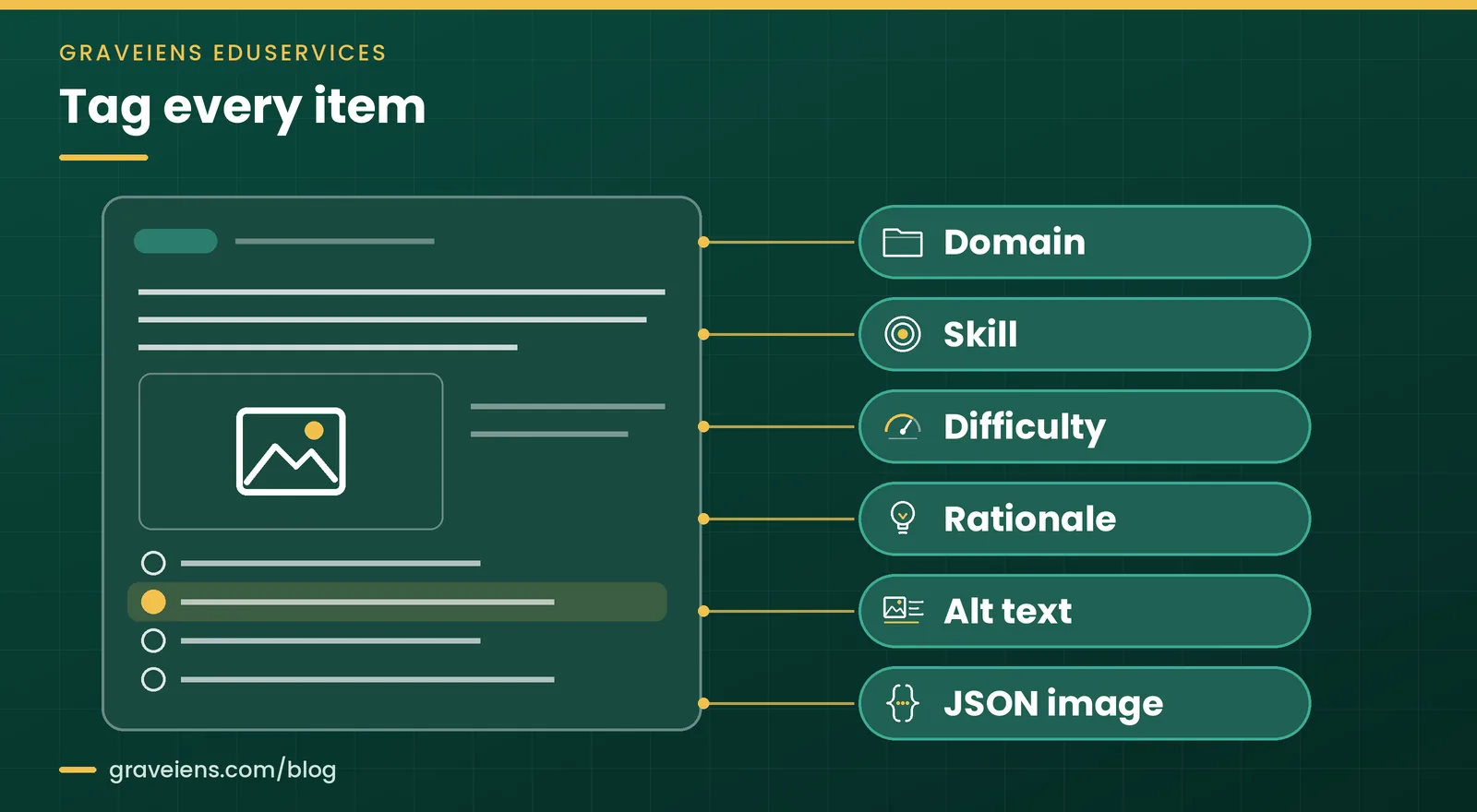
- Every item should carry metadata: domain, skill, difficulty, rationale, alt text and a delivery-ready image file. We call the readiness test the ADAPT item check.
- Never copy official questions. Write original items, and pilot them to confirm difficulty before they go live.
Many test-prep companies still run item banks built for the paper SAT. Those banks are full of long passages with several questions each, untagged difficulty and images that break inside an app. Digital SAT question writing needs a different spec: short passages, one question per passage, clear domain tags and difficulty spread wide enough to feed an adaptive engine.
This guide shows how to build that bank through disciplined digital SAT question writing. It covers the test structure, a six-step writing workflow, the metadata each item needs, coverage planning by domain and the mistakes that cause rework.
Want to see our item quality first? Send us 20 items to pilot and we will write or revise them to your spec.
What is digital SAT question writing?
Digital SAT question writing is the work of creating original practice items that mirror the digital SAT’s format, skills and difficulty range. Writers follow College Board’s public specifications for structure and content domains. Each item is then reviewed, tagged with metadata and piloted so a practice platform can serve it at the right difficulty.
The buyers are usually test-prep companies, tutoring networks and EdTech platforms. They need large banks for practice tests, skill drills and adaptive study plans. The writing itself is only part of the job. Tagging, review and delivery format matter just as much.
How is the digital SAT structured?
As of November 2026, the structure below matches College Board’s Digital SAT Suite Specifications Overview.
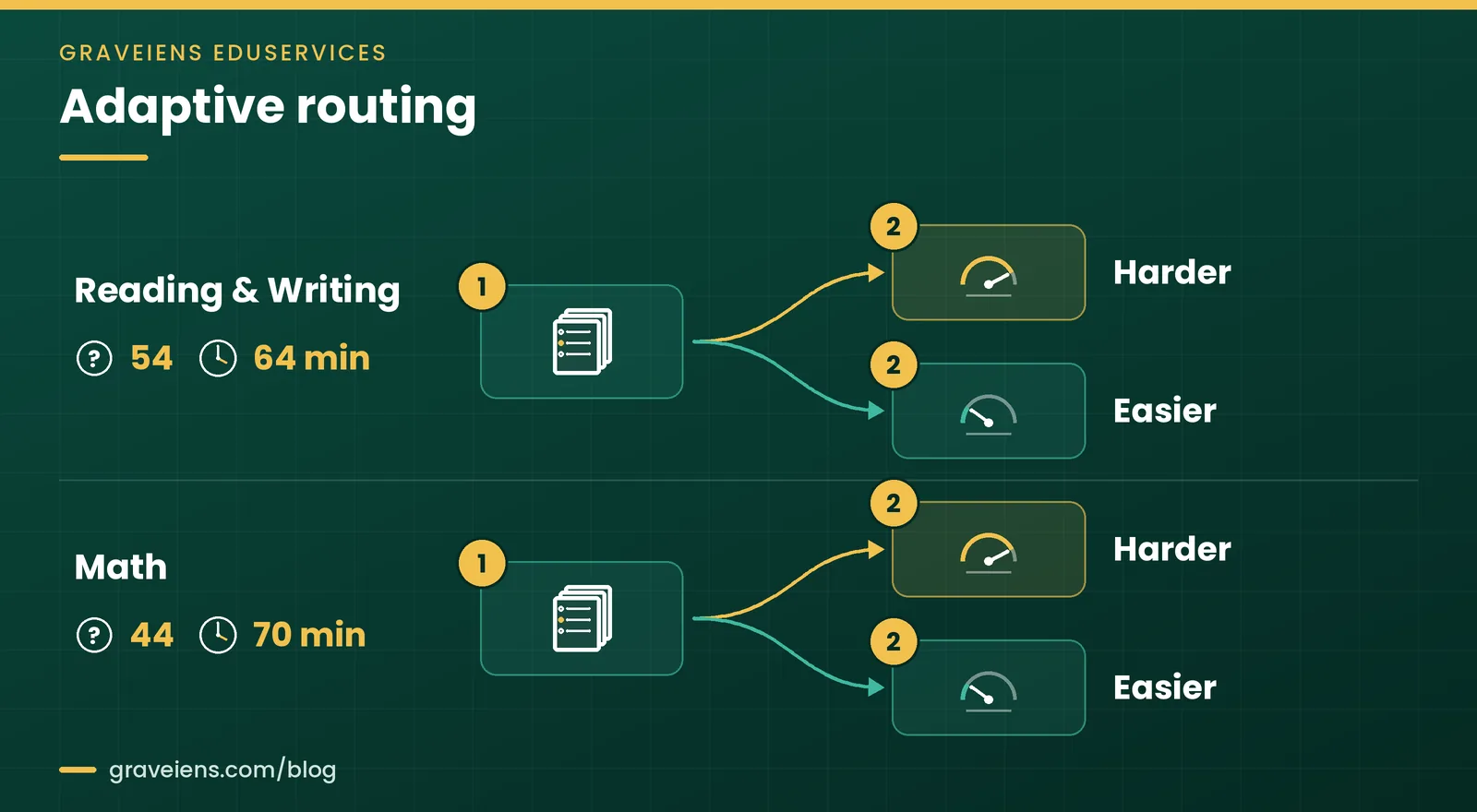
- Reading and Writing: 54 questions in 64 minutes, split into two 32-minute modules. Each module has 25 operational and 2 pretest questions.
- Math: 44 questions in 70 minutes, split into two 35-minute modules. Each module has 20 operational and 2 pretest questions.
- Adaptive routing: College Board’s explainer on adaptive testing says the first module mixes easy, medium and hard questions. The second module is, on average, either harder or easier, based on how the student did.
- Question formats: Reading and Writing uses four-option multiple choice only. In Math, about 75% of questions are multiple choice and about 25% are student-produced responses.
In short: the digital SAT is a two-stage adaptive test. Your bank must supply items at every difficulty level, not just medium.
How does the digital SAT question writing workflow run?
A reliable SAT item writing workflow has six steps: blueprint, write, content review, fairness review, difficulty tag and pilot. Each step catches a different kind of error. Teams that skip the pilot step often find that items tagged “hard” behave like medium items once real students answer them.
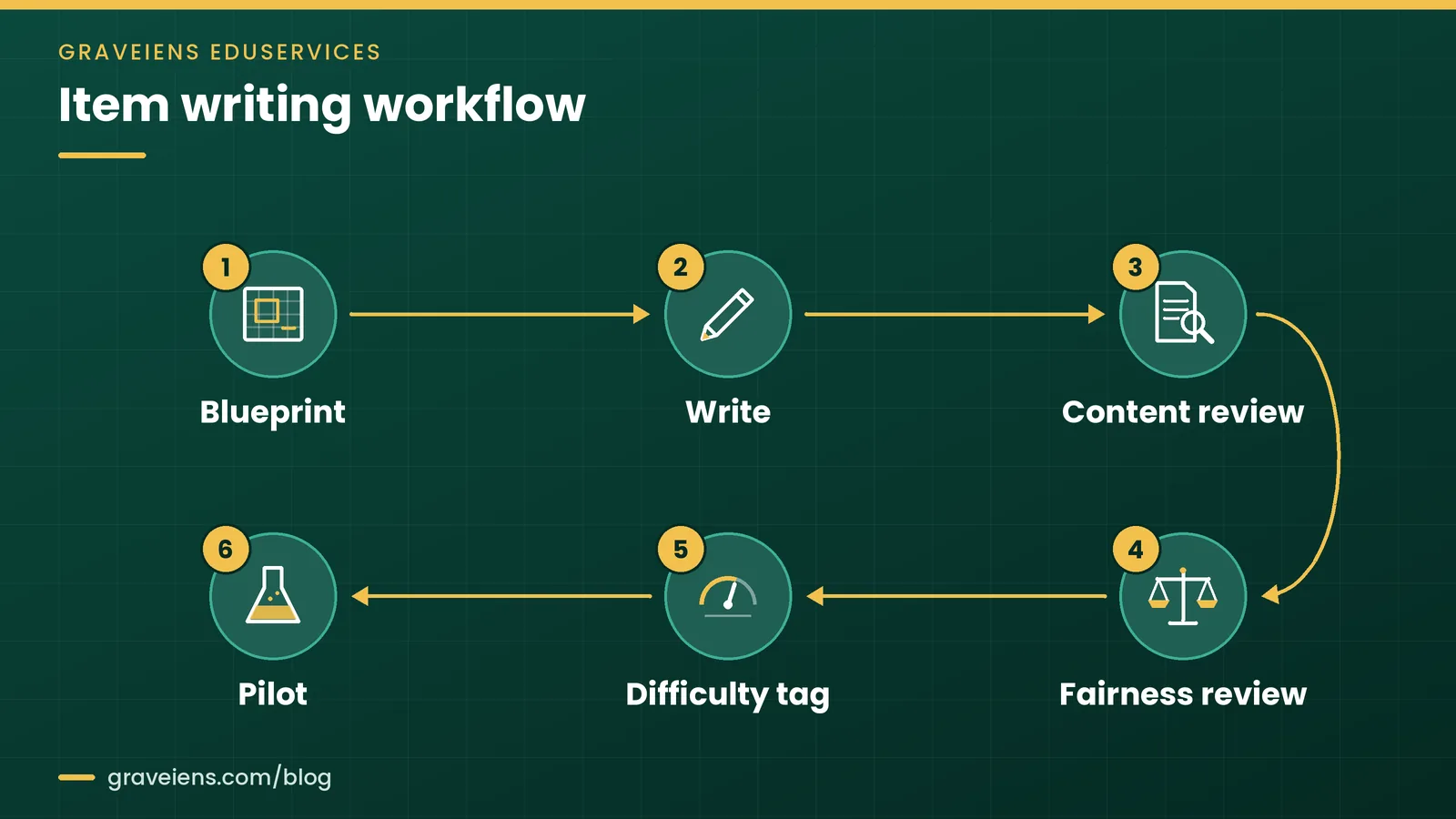
- Blueprint. Map how many items you need per domain, skill and difficulty level. Base it on the published domain shares, then add spares.
- Write. Trained writers draft original items to a style guide. In Reading and Writing, each short passage gets exactly one question.
- Content review. A second subject expert checks the key, every distractor and the rationale. In Math, they re-solve each item from scratch.
- Fairness review. Reviewers screen for cultural bias, regional knowledge, sensitive topics and language that could confuse English learners.
- Difficulty tag. Experts assign a starting difficulty and record why. This is a hypothesis until pilot data confirms it.
- Pilot. Serve items to real students and check how many answer correctly. Retag, revise or retire items based on the results.
In short: writing is step two of six. Budget review and pilot time from the start, or your bank will need a second pass.
What makes an item adaptive-ready? The ADAPT item check
An adaptive-ready item is aligned to one skill and carries evidence for its difficulty. It works for every learner, has plausible distractors with a rationale, and is tagged for delivery. We use a five-part ADAPT item check before any item enters a client bank. If one part fails, the item goes back to the writer. This check is the core of our digital SAT question writing process.
The ADAPT item check
- A – Aligned. The item maps to one content domain and one skill. Mixed-skill items make score reports less useful.
- D – Difficulty-evidenced. The starting difficulty tag comes with a short note explaining the reasoning. Pilot data later replaces the guess.
- A – Accessible. Graphs and figures have alt text. Text works with screen readers. Our guide to alt text for STEM images covers the details.
- P – Plausible distractors. Each wrong option reflects a real student error. The rationale explains why the key is right and each distractor is wrong.
- T – Tagged for delivery. Metadata fields are complete, and images ship in a format your platform can load directly, such as JSON with Base64-encoded images.
The metadata card in the graphic shows the six tags we attach to each item: domain, skill, difficulty, rationale, alt text and JSON image. Together they let your adaptive engine pick the right item and let your team audit it later.
In short: an item without metadata is just a question. An item that passes ADAPT is a bank asset.
Need items that ship with full metadata? Get a scoped quote for your next Reading and Writing or Math batch.
How should you plan coverage across content domains?
In digital SAT question writing, plan coverage from the published domain shares, then build depth at every difficulty level. Reading and Writing has four domains and Math has four. Your blueprint should reflect those shares so practice tests feel like the real thing, with extra items in high-share domains to support skill drills.
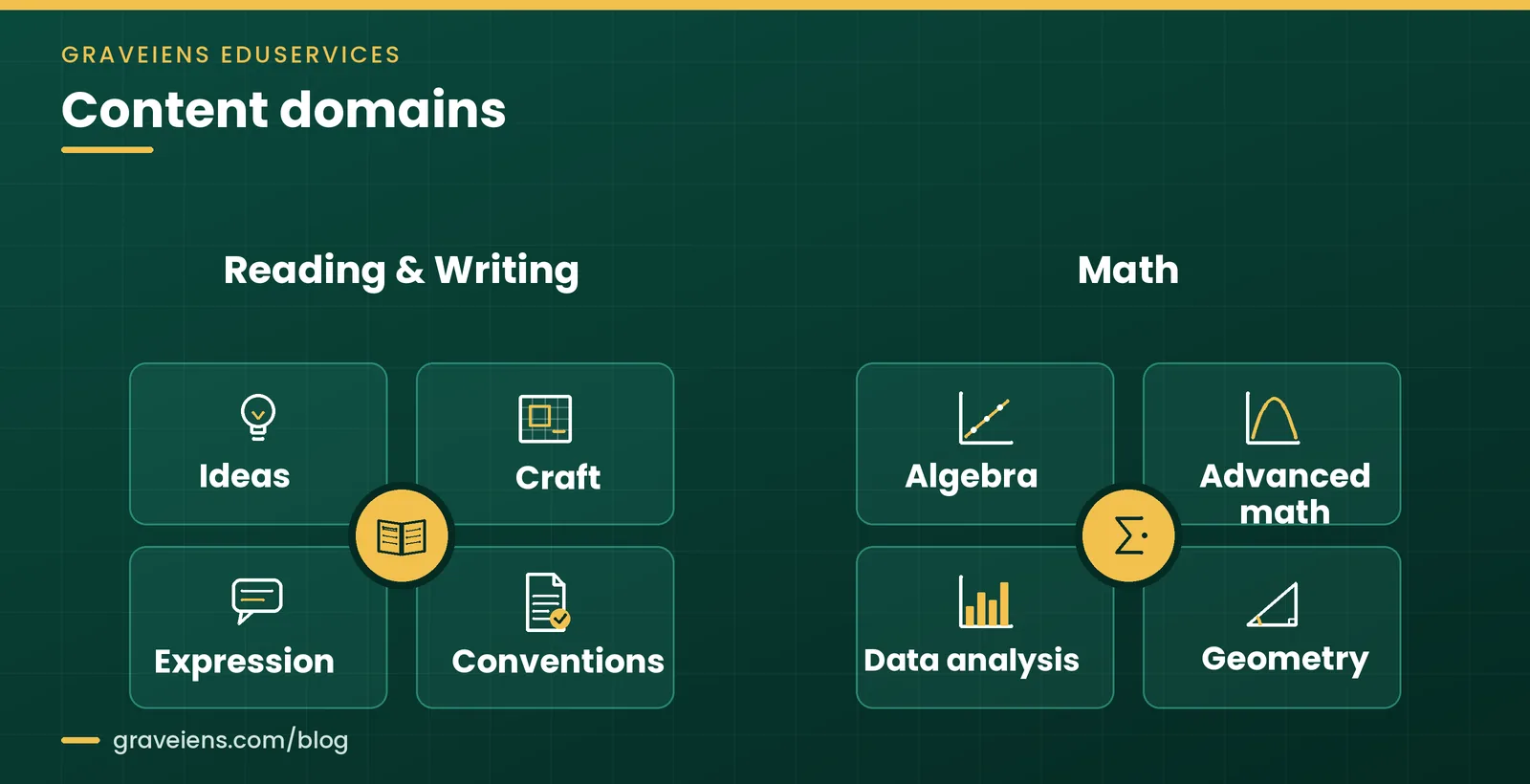
The shares below come from the College Board Specifications Overview and refer to operational questions.
| Section | Content domain | Share of questions | Writing focus |
|---|---|---|---|
| Reading and Writing | Craft and Structure | About 28% (13-15) | Words in context, text purpose, cross-text links |
| Reading and Writing | Information and Ideas | About 26% (12-14) | Central ideas, evidence, inferences, graphics |
| Reading and Writing | Standard English Conventions | About 26% (11-15) | Boundaries, form, structure and sense |
| Reading and Writing | Expression of Ideas | About 20% (8-12) | Rhetorical synthesis, transitions |
| Math | Algebra | About 35% (13-15) | Linear equations, functions, inequalities |
| Math | Advanced Math | About 35% (13-15) | Nonlinear equations and functions |
| Math | Problem-Solving and Data Analysis | About 15% (5-7) | Ratios, percentages, data, probability |
| Math | Geometry and Trigonometry | About 15% (5-7) | Area, volume, triangles, circles |
How many items does one adaptive practice test need?
A realistic practice test needs a routing module plus both an easier and a harder second module for each section. Using the operational counts, Reading and Writing needs 25 items times three modules, or 75. Math needs 20 times three, or 60. That makes 135 items for one practice test, before spares or skill-drill items.
What drives effort in digital SAT question writing?
- Passage sourcing. Reading and Writing passages must be original or properly licensed. Each passage supports only one question, so you need many of them.
- Informational graphics. Tables and graphs take longer to build, check and describe in alt text.
- Student-produced responses. These Math items need every acceptable answer form defined in advance.
- Hard items. Writing truly hard items that stay fair is slower than writing medium ones.
- Review depth. Each extra review pass adds time but cuts error rates in the live bank.
For a broader view of bank planning beyond the SAT, see our guide to question bank development services.
In short: map items to domains first, then to difficulty. A bank heavy in medium items cannot support adaptive practice.
Common mistakes in digital SAT question writing
Most rework in SAT-style banks traces back to a handful of avoidable mistakes. Several of them are legal or brand risks, not just quality issues.
- Copying or lightly editing official questions. Released and practice questions are protected content. Write original items, and use the public specs only as a guide.
- Implying official status. Do not call your items “official” or suggest any link to College Board. Use terms like “SAT-style” or “digital SAT practice.”
- Reusing paper-era passages. Long passages with several questions do not match the one-passage, one-question format.
- Clustering at medium difficulty. Adaptive practice needs easy and hard items in depth, not just a few at the edges.
- Guessing difficulty forever. Expert tags are a start. Without pilot data, you cannot trust the routing.
- Skipping fairness review. Topics that need regional or cultural knowledge can make items unfair to some students.
- Breaking images in delivery. Figures saved as loose files often break inside apps. Ship them in a format your platform can load directly.
If your bank also feeds end-of-unit tests, our explainer on summative assessment covers how those items differ from practice items.
In short: protect your brand by writing original items, and protect your learners by piloting before you trust difficulty tags.
How GravEiens EduServices approaches digital SAT question writing
GravEiens EduServices has built education content since 2017, including assessment and test-prep material for publishers and EdTech companies. Our quality system is ISO 9001 certified.
Every item batch runs through our four-stage QA: content creation, internal review, client review and final delivery. You approve a sample set before we scale, so style and difficulty match your platform from the first batch.
For question banks, we deliver images in JSON with Base64 encoding, so figures load straight into your platform without broken links. Learn more about our test prep content development and our wider assessment authoring services.
Frequently asked questions
How many questions are on the digital SAT?
Per College Board’s published specifications, the digital SAT has 98 questions in total. Reading and Writing has 54 questions in 64 minutes, and Math has 44 questions in 70 minutes. Each section is split into two equal, separately timed modules. A small number of unscored pretest questions are included in each section to support test development.
How does digital SAT adaptive testing work?
The digital SAT uses a multistage adaptive design. In each section, every student takes a first module with a broad mix of easy, medium and hard questions. Based on that performance, the student moves to a second module that is, on average, either harder or easier. The section score uses answers from both modules.
Can we use official SAT questions in our item bank?
No. Official and released questions are protected content, and copying or lightly editing them creates legal and brand risk. Build your bank from original items written to the public specifications. You can study the published structure, domains and sample formats as a guide, but every passage, question and answer choice in your bank should be new.
What is a student-produced response question?
A student-produced response question asks students to type their own answer instead of choosing from options. According to College Board’s specifications, about 25% of Math questions use this format. When writing these items, define every acceptable answer form in advance, such as fractions and decimals, so scoring stays accurate inside your platform.
How do you assign difficulty to new SAT-style items?
Start with expert judgment. Writers and reviewers tag each item as easy, medium or hard and note why. Then pilot the items with real students and check how many answer correctly. Use that data to confirm or change the tag. Items that behave unpredictably should be revised or retired before they feed adaptive routing.
Should Reading and Writing passages be original?
Yes, or properly licensed. The digital SAT pairs each short passage, or passage pair, with a single question, so a full bank needs many passages. Commissioning original passages avoids permission problems. If you use published texts, confirm the rights cover commercial digital use and record the source in each item’s metadata.
Pilot your next SAT-style item batch
Send us 20 items to write or revise. We will run them through our four-stage QA and return them with full metadata and JSON-ready images. Request a free sample task or get a scoped quote for a full bank.
SAT is a trademark of College Board, which is not affiliated with this article.
Sources
- College Board, “The Digital SAT Suite of Assessments Specifications Overview”
- College Board Blog, “What is Digital SAT Adaptive Testing?”
GravEiens EduServices Editorial Team
The GravEiens EduServices Editorial Team includes assessment editors, subject experts and instructional designers who write and review practice items for test-prep companies and EdTech platforms. We base every post on hands-on item development work and check test facts against published specifications.

 Assessment & Question Banks
Question Bank Development Services: Process, Quality Checks and Cost Drivers
Question bank development services explained: item anatomy, 7-step process, QA checklist and cost drivers. Send your blueprint for 20 free…
Get monthly EdTech insights
Trends, content tips and how-tos — once a month, no spam.